
On the day the American Presdient had himself a military parade for his 79th birthday, large protest rallies took place in most American cities, two politicians were shot in Minnesota and Israel waged the second day of its second Middle East war, I was witnessing the “No Kings” protest on Liberty Plaza in front of the Georgia Stage capitol in Atlanta, visited the Martin Luther King Historical Site and checked out the Jimmy Carter Presidential Library and Museum. It was, let’s say an odd experience.
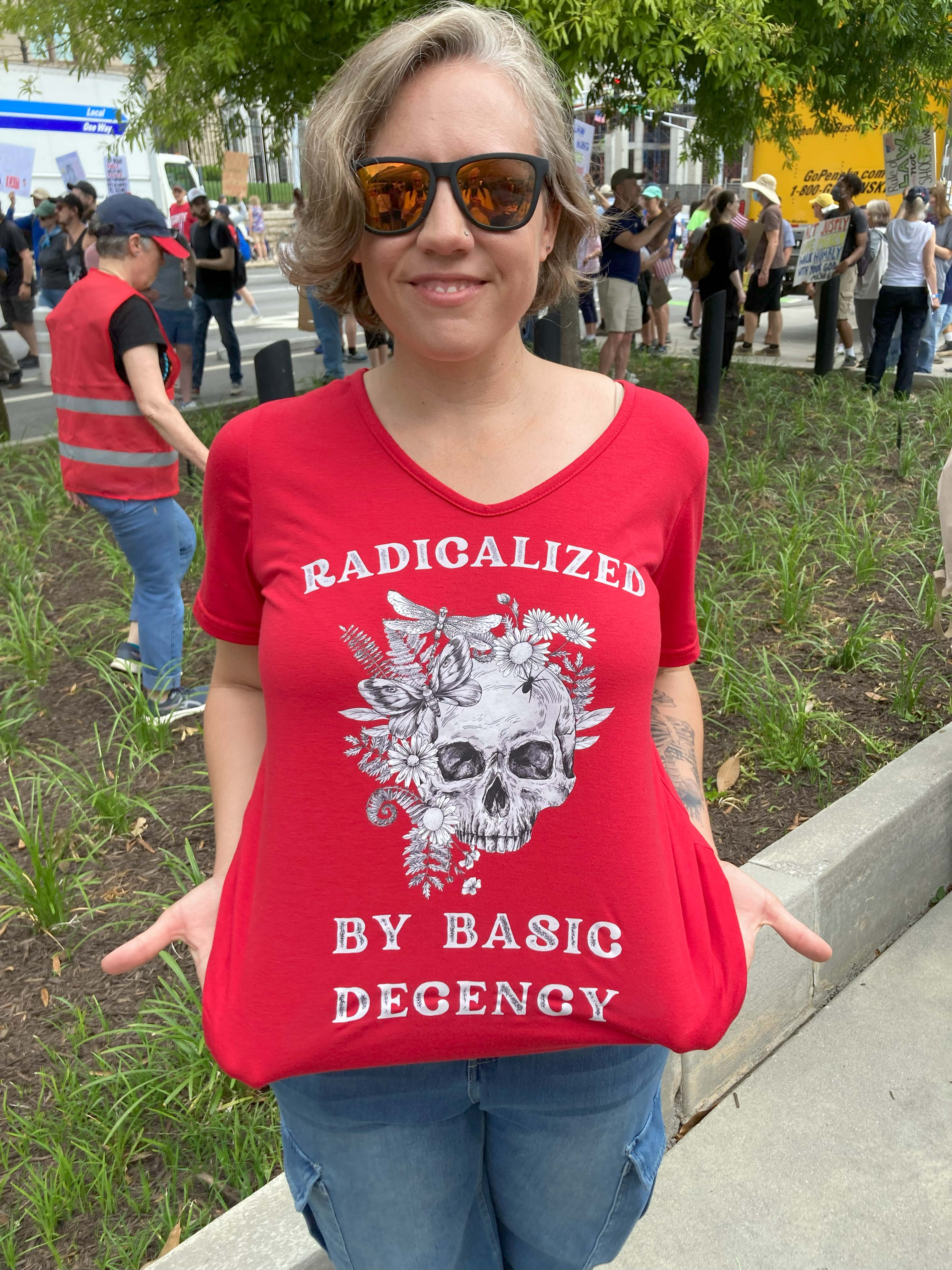
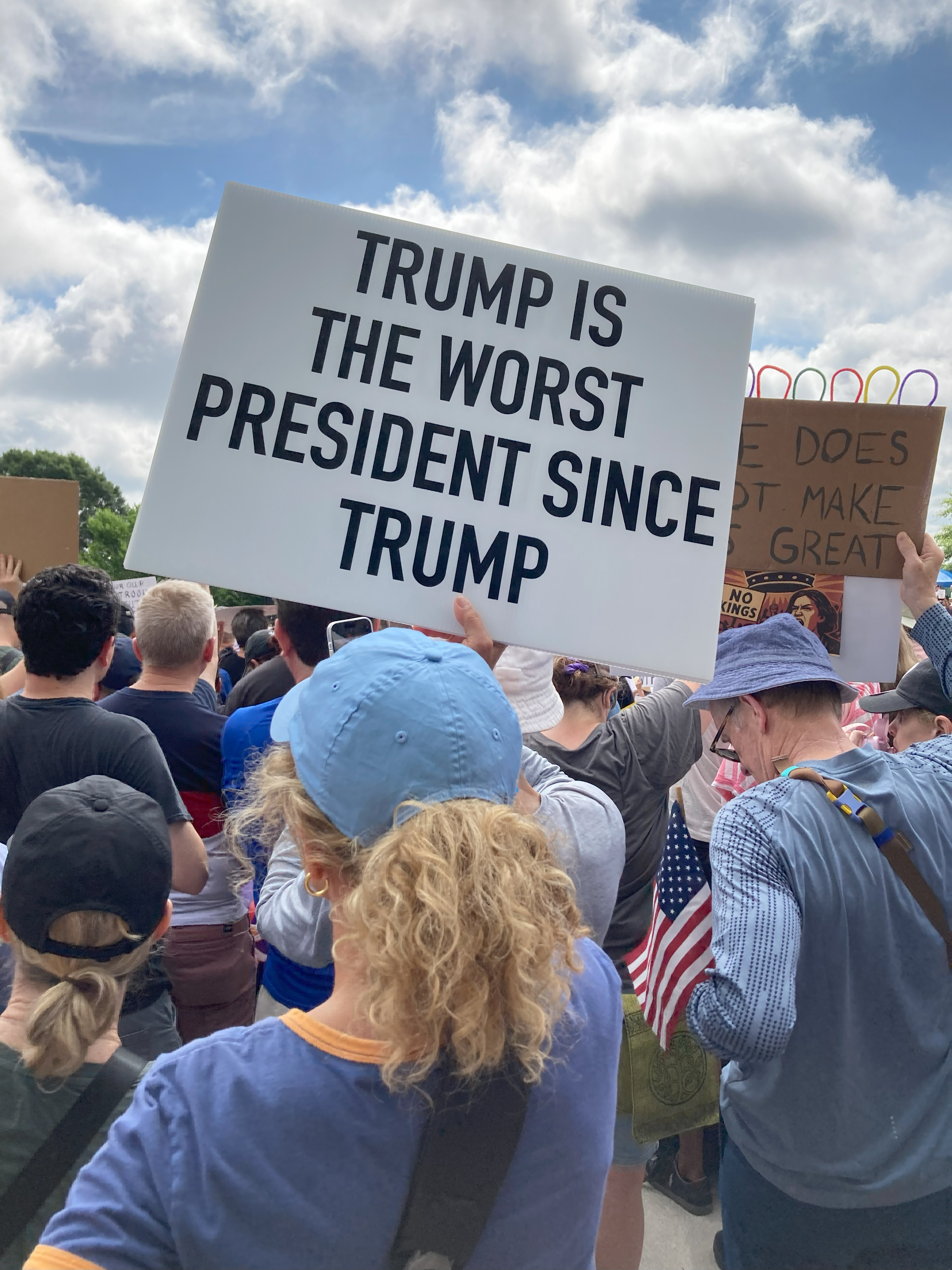
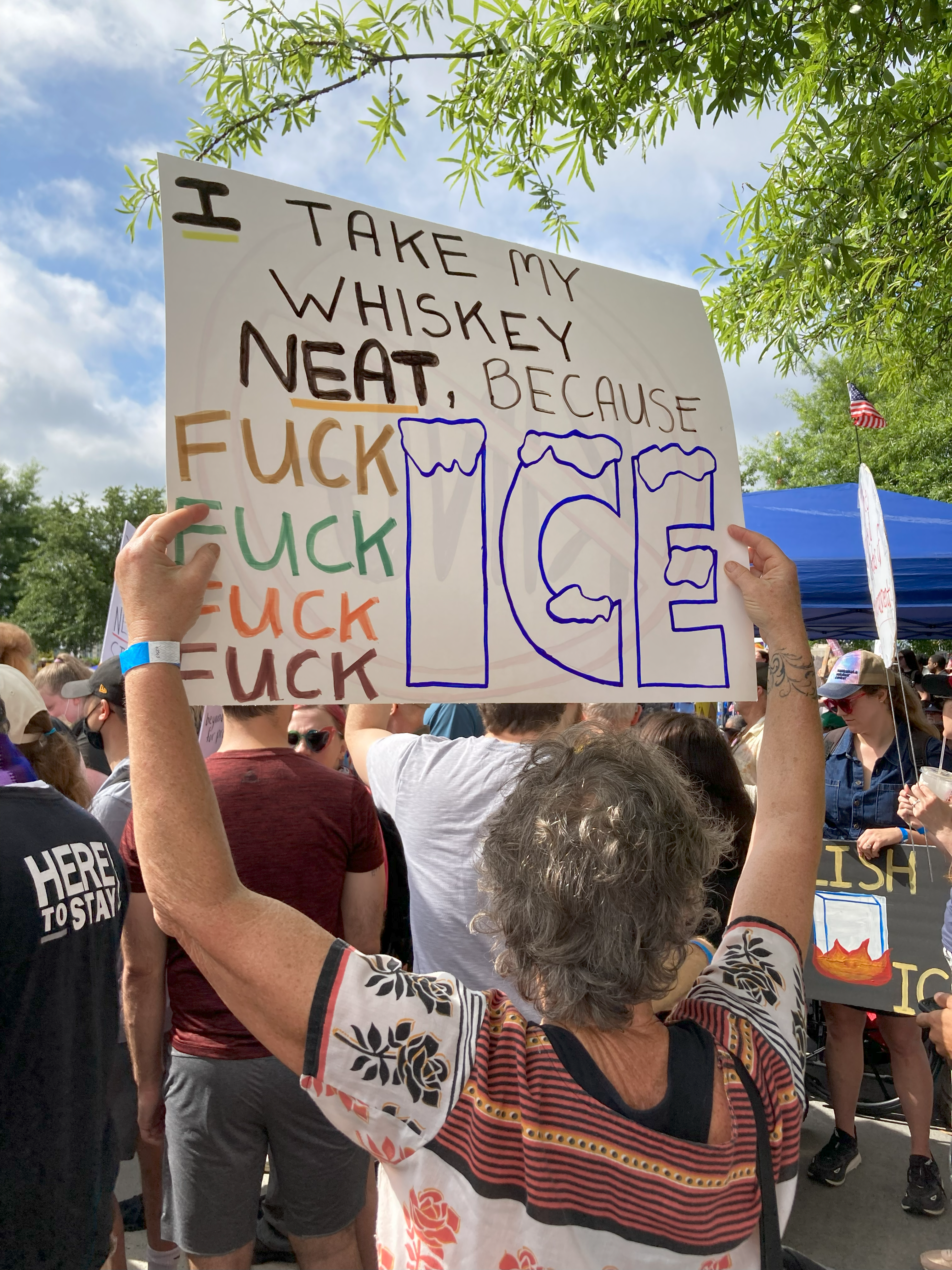
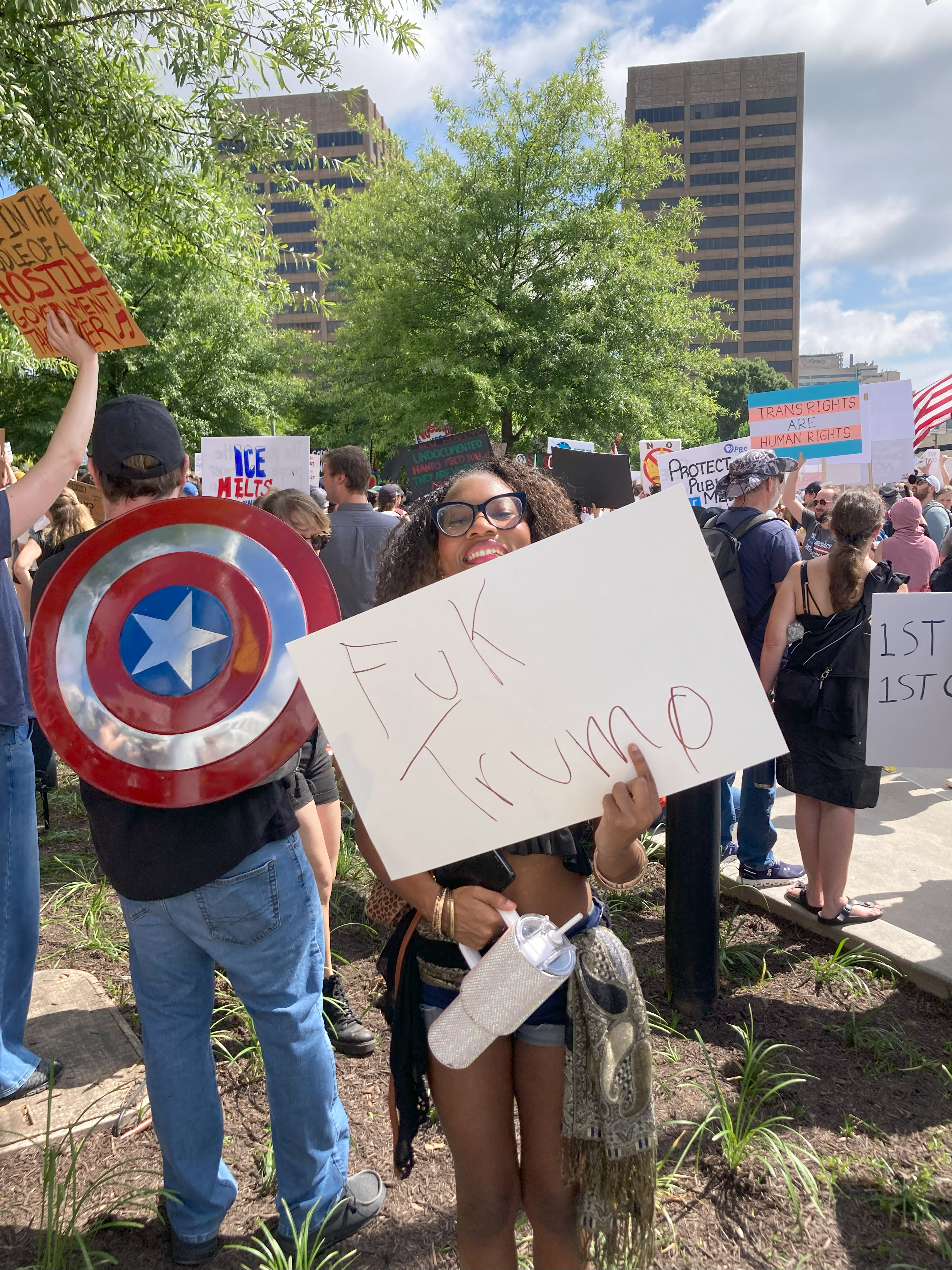
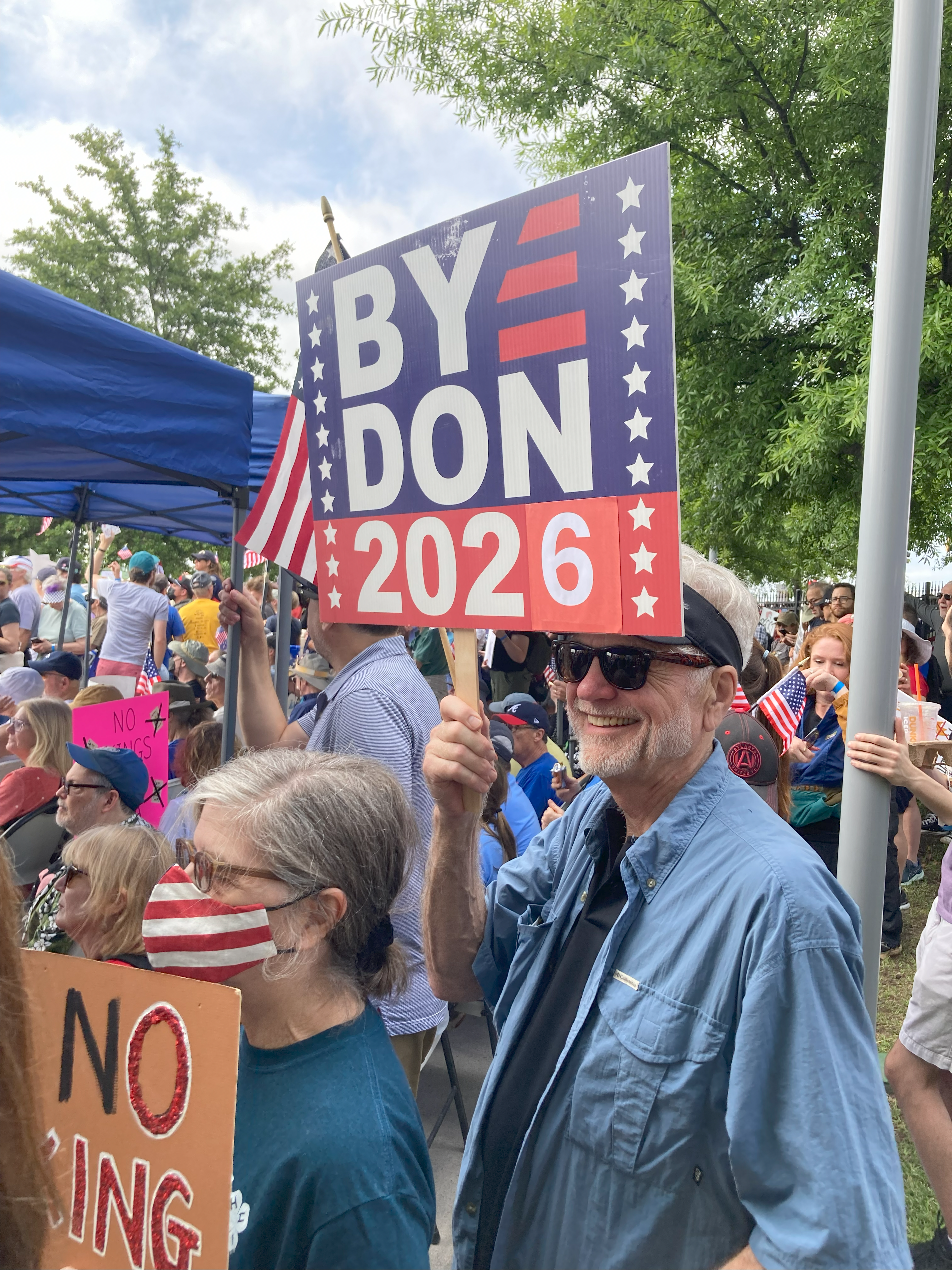
If the number of hand-made signs is an indication of the seriousness of a protest, the “No King” in Atlanta was a class A event. There was a sea of them, some funny, some predictable, some clever, not a few uncouth. The amount of “fucks” on the placards was probably equal to a Trump event. All what makes a political gathering a “success” was in place: The crowd was big, Liberty Plaza full, with a considerable overflow. There were chants, “Liberty and Justice for all” from the pledge of allegiance. “No Kings”, the motto of the rally, hinted at Donald Trump’s penchant for autocracy at the expense of the traditional balance of power and the doing away with due process. “No Kings” was meant as a broadside covering all aspects of Gleichschaltung that the federal government is trying to achieve, from the ban on wokery, the muzzling of judges, the blackmail of adversarial lawyers (and foreign countries) to the current employment of the armed forces inside the country. All of it evoked by the speeches down somewhere in the heart of the crowd.
***
Asked why she was attending, a lady who gave her name with “Sissy” said two words: “the law”.
***
And yet and yet. The raw energy that can be felt at a Trump rally. fueled by anger, hate and despair, was missing. These protesters were polite. They said “excuse me”, or even “excuse me Sir”, when trying to plow through the crowd. The speeches were boring. Long recitations of left-wing pet peeves, each duly mentioned, none left out. I found no fire and not enough brimstone. Also, no violence. The police, modestly present, had nothing to do. The protesters who marched towards the plaza all stayed on the sidewalks.

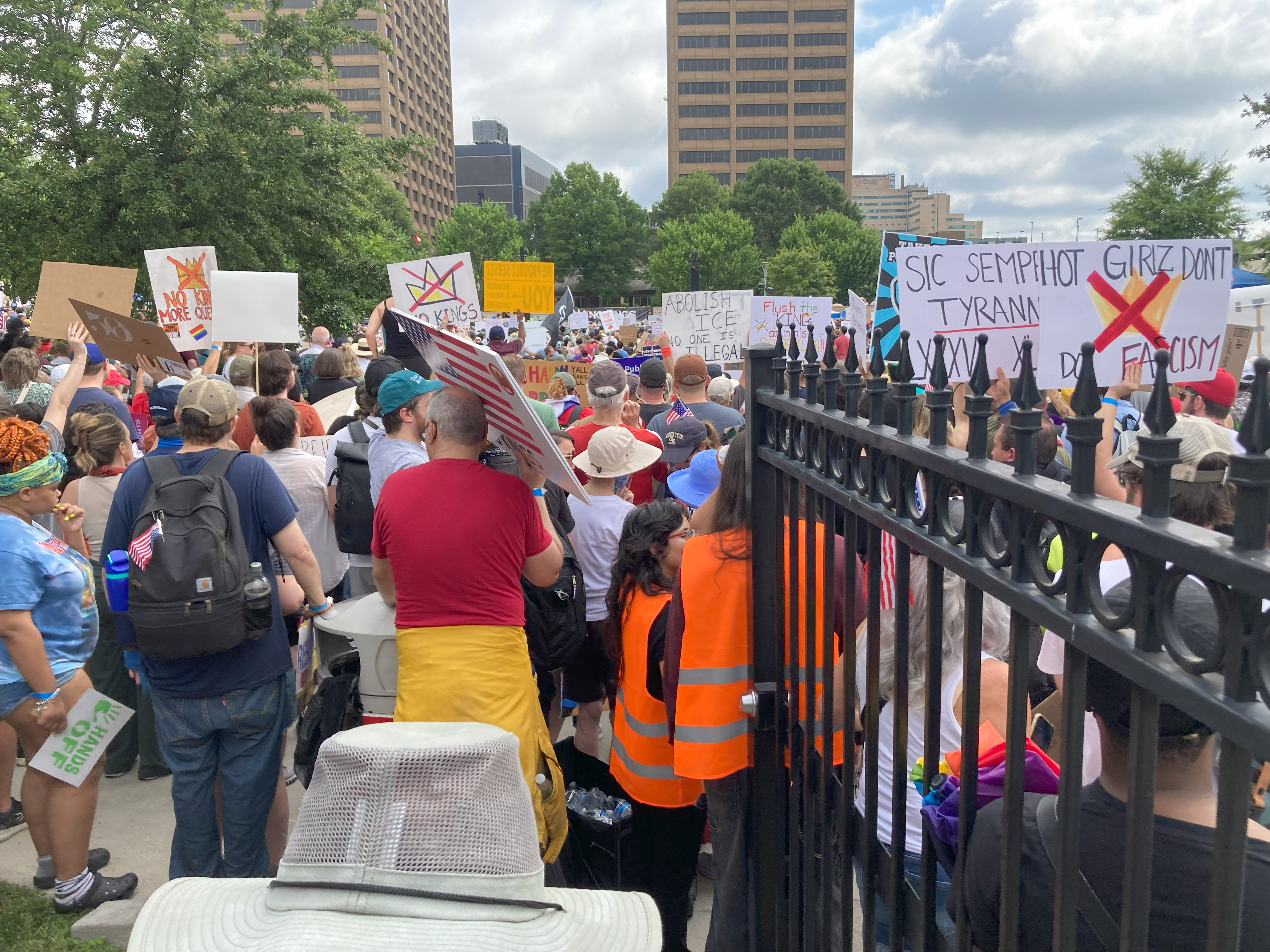
After one hour I called it quits. Outside, in the overflow, an ad hoc oompah band intoned “bella ciao”. They created a bit of a spark, but were in competition with a black servant of the Lord who told the crowd that all earthly aspirations were naught and all that counts is Jesus Christ.
***
The blacks: there were surprisingly few of them at the rally, rather less than at a regular Aufmarsch of Trump. Ditto Latinos and other skin-color-coded members of humanity. At the Martin Luther King site on Jackson Street some black folks were preparing for a Juneteenth parade, cheerleading girls and heavy-motored SUVs getting ready to move. Other fish to fry.
The King site is a park with a playground, some kind of community center, a small museum, a rose garden and also the gravesite. Ebenezer Church across the street, where father and son King preached, was not accessible. The museum documents the life and career of the slain civil rights leader who fought for and obtained the voting rights that were denied to black people in many Southern states, and then moved on to the demand for “economic justice” which killed him. King was murdered while supporting a strike of the sanitation workers in Memphis/Tennessee.
***
Two things stick out in that museum. One is the nonviolence of the King movement, the other the utter clarity of purpose. King and his followers preached and demanded abstention from violence even in the face of most brutal police action against protesters – more brutal than what we see on television in today’s “crowd control” in New York City or Portland/OR. One screen in the museum shows King’s simple argument against armed resistance: “We cannot win”. He proposed practical, attainable aims for nonviolent action: voting rights, integration of transportation systems, “the right to protest”. A broad-stroke motto like “No King” – or for that matter, “Black Lives Matter” – might have met the doctor’s criticism of being too abstract.
One room of the museum is dedicated to the “Georgia peacemakers” Martin Luther King and Jimmy Carter whose outstanding achievement as President is the Camp David peace between Israel and Egypt. An agreement that holds for almost half a century now, albeit it was not the lasting peace between the Arab world and the Jewish state that was aimed for at a time. Not at all. While I read the words of praise for Carter’s peacemaking skills, the news are dominated by the second day of bombing and assassinating between Israel and Iran, a new war started by Israel’s surprise attack on nuclear facilities and military leadership of the mullah regime. In the Gaza strip, formerly Egypt’s, more than 50 000 civilians have been killed by Israeli military action, allegedly pursued to force Hamas to let their remaining hostages go.
***
The “Presidential Library and Museum” of Jimmy Carter, is also in a park, like King’s, but a much more polished, serene park, with trees and a covered walkway. It is more than just a repository of the ever snowballing memorabilia, documents, testimonials of an American leader. The complex also houses the “Carter Center”, a renowned institution for fighting tropical diseases and advocating human rights. Carter, vilified as a hapless leader, was widely honored (and Nobel-prized) by his peacebuilding efforts as an ex-President. The museum chronicles his life and career – son of a Georgia peanut farmer, Navy officer in the nuclear submarine force, then back to peanut farming, running for office (interesting factoid: he challenged of his first election results as fraudulent, like Trump, and won in court), and in 1976 elected 39th president of the US. He died last December, 100 years old. In 1980 he lost his reelection bid in a landslide amid galloping inflation, economic stagnation and the lingering crisis of 52 Americans held hostage by Ayatollah-backed “students” in Iran. The hostages were released on the day Carter’s successor Ronald Reagan took office.
Of course, the museum paints the man in the best light possible. There is no talk of “stagflation”, the economic scourge of America at the time and nothing about the “neutron bomb”, designed to kill people and leave buildings untouched. The spotlight is on Carter’s far-sighted demand to curb the appetite for fossil fuels (he asked Americans to drive slower and turn down their air conditioners) and his advocacy of human rights as a guiding principle for US foreign policy. “Our commitment to human rights must be absolute”, he said. “The powerful must not persecute the weak”. Advice that most evidently is not heeded by his successors.
***
By today’s powers that be a Jimmy Carter is considered a wimp, unable and unwilling to wield force where force is wielded best. His agreements with rivaling powers are pooh-poohed as compromising the nation’s best interest. Still, it is amazing how much was achieved in four years: A treaty on the Panama canal, trading Panamaian sovereigny over the narrows for secure access. A new strategic arms control agreement with the Soviet Union (not ratified by the US senate). Full diplomatic relations with China. And Camp David. For 12 days Carter cajoled and coaxed the Israel prime minister Begin and the Egyptian president Sadat in the presidential retreat in Maryland, keeping them at it with ever new proposals until an agreement in general was achieved, to be followed by a formal peace treaty few months later. Talking about “the art of the deal”: In his four years in office, the nuclear engineer-cum-peanut-farmer from rural Georgia was way more effective than the reality-TV-host-cum-millionaire-heir from New York City. If “the art of deal” was ever applied to diplomacy, it was there.
***
Regarding the hostages, there is no mentioning the suspected secret negotiations between the Reagan campaign with the Iranians aiming at preempting a last-minute Carter success on getting them free. Nor, strangely enough, any mention of the failed attempt to rescue the hostages militarily. But one screen in the exhibition shows Carter discussion the “military option” of hitting Iran by demolishing their oil fields or their harbors. He had the means to “destroy Iran”, Carter says, but he “could not do” it, because he would have condemned the American hostages to death. Unthinkable that a comment like that will ever be seen in a Netanyahu ministerial library and museum.
It is Saturday. Coming back to the hotel in early evening, Fox television airs live footage from the military parade in Washington. The first such parade since America’s victory over Saddam Hussein in 1991. The occasion is Flag Day, a minor American holiday memorizing the designation of the Stars and Stripes as the flag of the US Army in the year 1775. Up to now never a big deal. But it is Donald Trump’s birthday and after he witnessed what the French do on Bastille Day he ever wanted something like this. The dads lining Massachussetts Avenue hold the boys up to ogle the armored carriers and the detachments marching in stride. An army recruiting video is shown, heroics and blaring metal rock and handsome young people extolling the virtues of discipline and “values”. The Fox reporter gushes about how “awesome” it was to have Blackhawk helicopters hovering over her.
***
A military parade on the President’s birthday? A Jimmy Carter surely would not have asked for it. To the contrary he would have done everything to avoid it, lest he would be perceived as a strongman. Even on Flag Day.